
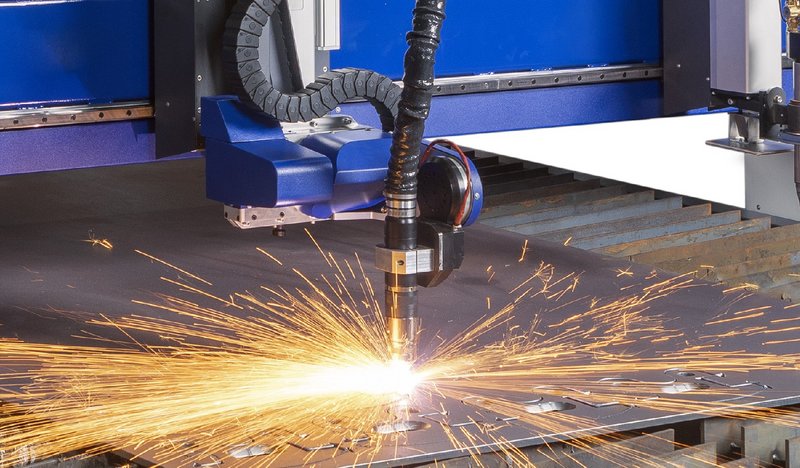
Steel rarely forgives guesswork, especially when one wrong edge can force rework, wasted material, or a poor-fitting assembly. A CNC plasma cutter improves fabrication accuracy by joining computer-controlled motion with a high-temperature cutting arc, giving metal shops cleaner profiles, steadier part repeatability, and tighter control than hand-guided cutting can usually provide.
How Programmed Torch Motion Removes Guesswork From Metal Cutting Paths
Accuracy begins before sparks touch the plate. A CNC plasma cutter follows programmed coordinates from digital files, so the torch moves along the same path each time without depending on hand pressure, visual judgment, or operator fatigue. This matters in fabrication because brackets, gussets, frames, tabs, and panels often need matching hole placement and consistent outside dimensions. Manual cutting can still work for rough shapes, but it tends to drift around curves, corners, and long straight lines. Programmed motion keeps the torch travel smooth and measured, especially on repeat jobs. For shops comparing equipment from a CNC machine company or searching for CNC companies near me, this is often one of the biggest accuracy upgrades to consider.
Why Kerf Compensation Helps Parts Fit Better After the Cut
Thermal cutting removes a thin strip of metal called the kerf, and that missing material can change the finished size of a part if the machine does not account for it. A CNC plasma cutting machine can offset the toolpath so the final edge lands closer to the intended measurement. That small adjustment has a large effect on fit-up, especially when slots, bolt holes, tabs, and mating edges must line up. Without kerf compensation, parts may come out slightly undersized or oversized, causing welders and assemblers to grind, shim, or force pieces into position. A properly set plasma cutter helps reduce those hidden fitment problems by treating cut width as part of the design, not an afterthought.
How Torch Height Control Protects Cut Quality Across Uneven Plate
Digital accuracy can fall apart if the torch rides too high or too low above the workpiece. Modern CNC plasma cutter systems often use torch height control to maintain the proper distance from the metal surface during cutting. This feature helps because steel plate is not always perfectly flat; it can bow, warp, or carry slight surface variation from storage and handling. A torch that stays too far from the plate may leave a wider, rougher edge, while one that sits too close can damage consumables or distort the cut. Stable torch height supports cleaner edges, better hole quality, and more predictable dimensions from one section of the sheet to another.
Why Repeatability Matters More Than One Perfect Part
Operators can sometimes make one excellent part by hand, but fabrication accuracy becomes far more valuable when the same part must be made ten, fifty, or five hundred times. CNC plasma cutting improves repeatability because the machine does not reinterpret the drawing with every pass. It uses the same coordinates, cutting speed, lead-ins, pierce points, and sequence unless the program changes. This helps production teams keep assemblies consistent and makes quality checks easier. Repeatability also supports faster quoting, steadier delivery schedules, and less material waste. For production work, the real benefit is not only a clean first part; it is getting the same reliable part again without rebuilding the process from scratch.
How Better Nesting Reduces Waste While Preserving Dimensional Control
Material layout has a quiet influence on accuracy. Smart nesting software arranges parts on a sheet so the plasma arc has proper spacing, cleaner entry points, and fewer risky heat zones between features. Poor layout can place cuts too close together, which may increase heat buildup, edge distortion, or scrap. A CNC plasma cutting machine can follow a planned nesting strategy that protects both material yield and part quality. This becomes useful on jobs with mixed part sizes, repeated brackets, or complex profiles. Better nesting also helps fabricators use more of each sheet without crowding cuts into areas that may compromise dimensional control.
The Role of Clean Digital Files in Sharper Fabrication Results
Consistent accuracy depends on more than the machine itself. A clean CAD file gives the CNC plasma cutter precise geometry to follow, while a messy drawing can create duplicate lines, open contours, awkward corners, or incorrect hole sizes. Fabricators often improve results by checking drawings before cutting, setting proper lead-ins, matching amperage to material thickness, and using the right consumables. Good programming turns the plasma cutter into a precise production tool instead of just a fast cutting machine. This is where experience matters. Amtec Solutions Group brings automated robotics manufacturing and precision machining experience to companies that need CNC plasma cutting support focused on clean accuracy, consistent fabrication, and efficient production movement.